
Menopause Brain Fog: 3 Ways to Find Your Powerful Voice Again in School
Menopause can mess with your words in a way that feels almost cruel, especially in schools where you’re expected to think fast, speak clearly, and stay composed no matter what’s happening in your body.
I first noticed it in our weekly CPD. We were deep into a dense discussion about the new assessment framework when a senior colleague turned to me and said, “Let’s get your thoughts on this, what’s your take?”
It was a classic cold call. The kind many of us use with pupils (carefully), because we know how easily it can spike anxiety for some learners. Yet in staffrooms, we rarely apply the same thoughtfulness to adults. We just assume that because we’re grown-ups, we should be able to handle any thinking demand, at any time, without warning.
The question was gentle, and I’m sure it came from a good place, an attempt to include me. But the impact was the exact opposite.
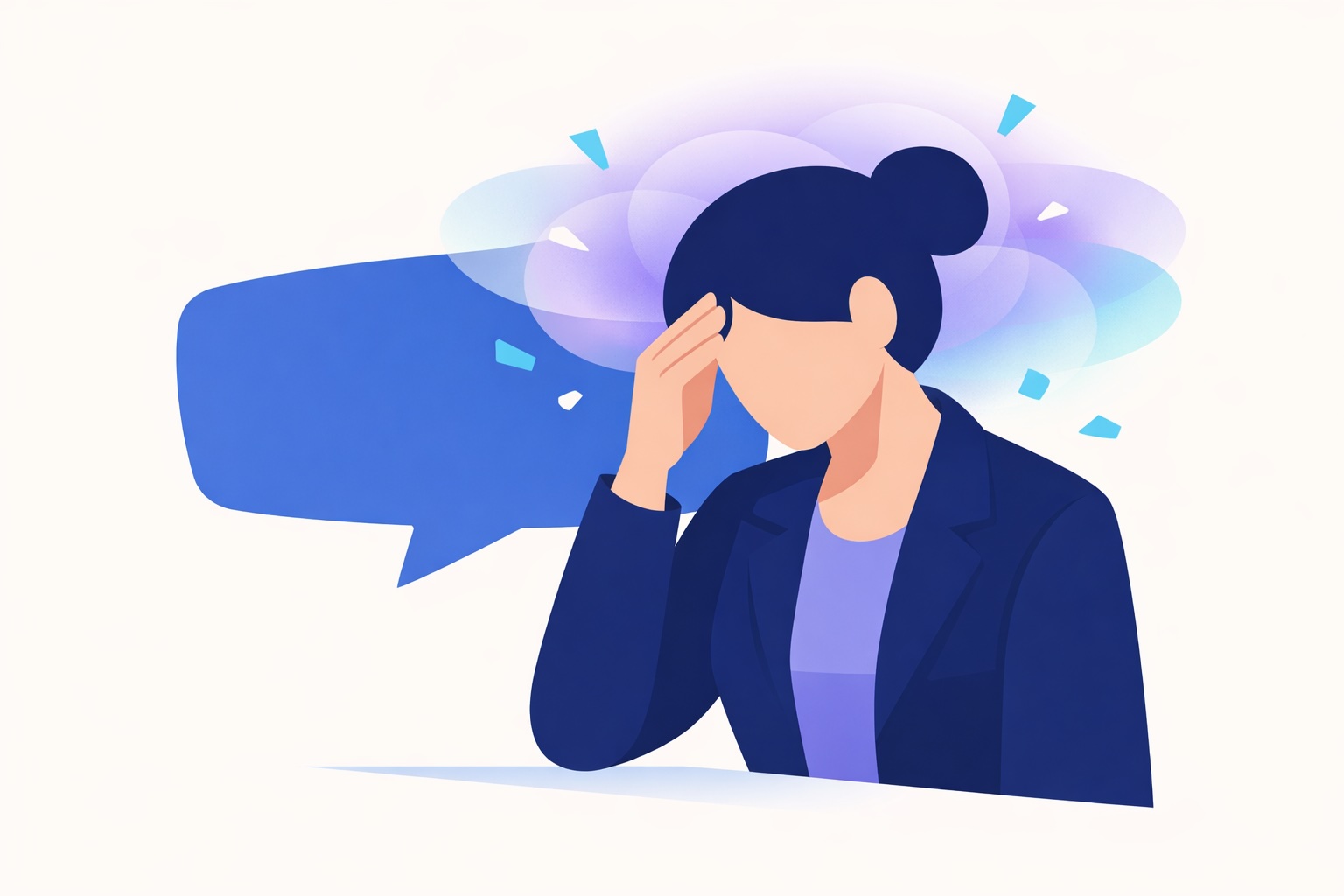
My mind went utterly, terrifyingly blank.
I knew the topic. I had opinions. But I couldn’t grip a single coherent thought. I mumbled something vague, feeling a hot flush of embarrassment as the attention of the entire room locked onto me.
And this is the part we don’t name enough. This style of “popcorn” questioning, putting colleagues on the spot in front of everyone, isn’t just poor meeting etiquette. For many women navigating menopause, it can be downright inconsiderate. It ignores the cognitive fog so many of us are silently managing.
When Menopause Brain Fog Makes You Withdraw
This is the reality that isn’t spoken about nearly enough in our staffrooms.
For so many of us, brain fog is a hallmark symptom of perimenopause and menopause. Nobody prepares us for how it can affect processing speed, word recall, working memory, and confidence. Suddenly we need more time to put a thought together. We lose words that used to live right on the tip of our tongue. We feel less sharp, and in a job that relies on instant, high-stakes decision-making, that can feel like a professional liability.
And what do we do after we’ve been cold-called and felt foolish? We withdraw. We stop putting our hand up in the meeting. We avoid big discussions. We sit back and let other people take the space because we’re terrified our brain will fail us again at the crucial moment and we’ll be “found out”.
Why This Silence Becomes a Systemic Problem
That urge to withdraw and suffer quietly isn’t just personal. It’s systemic.
There’s still a heavy stigma around menopause at work, that if you mention it you’re “making excuses”, “being dramatic”, or “not coping”. It’s no wonder that research consistently shows a large proportion of women experiencing symptoms don’t feel able to talk to their line managers about it.
And here’s the bigger issue. This silence fuels retention problems in education. Schools haemorrhage experienced, brilliant women, not because they suddenly became bad at their job, but because the profession often refuses to offer basic, humane adjustments. What we lose isn’t just staff. It’s institutional memory. Mentoring capacity. Calm leadership in the corridor. Skill that can’t be replaced by a new starter induction.
Leadership doesn’t need to respond with grand, expensive interventions. Most of the time, what’s needed is understanding, sensible policy, and small practical adjustments, like flexible working where possible, access to a fan, a quieter room for PPA, or simply changing meeting culture so people aren’t put on the spot for performance points.
What I Wish Someone Had Told Me About Menopause
Your brain isn’t broken. And you’re not losing competence.
The real issue is that school culture demands instant, performative thinking, and it has very little patience for the extra processing time many of us need during menopause.
Your wisdom and experience are needed more than ever. You just need a different way to access them under pressure.
Menopause Brain Fog: 3 Ways to Find Your Powerful Voice Again in School
I didn’t get my voice back by pushing through. I got it back by changing how I prepared for the moments that used to trip me up, meetings, data discussions, uncomfortable conversations, CPD debates, “quick chats” in corridors.
The game-changer wasn’t another resilience session or mindfulness workshop. It was scaffolding my thinking, the same way we scaffold pupils, except this time the learner was me.
Here are the three ways that helped me find my voice again while navigating menopause brain fog.
1) Name It as Menopause, Physiological Not a Personal Failing
The trap is berating yourself. “I’m rubbish at my job now.” “I’ve lost it.” “I can’t cope anymore.”
Menopause brain fog can feel like your competence is slipping through your fingers, and the shame hits fast, especially in a profession where “confidence” is treated as proof of capability.
The shift is naming it for what it is. Menopause is a physiological transition. Hormone changes can affect sleep, anxiety, memory recall, concentration, and cognitive processing. That doesn’t mean your experience disappeared. It means your brain is working with a different set of conditions right now.
When I started saying, “This is menopause” (even just to myself), the panic softened. And when panic softens, you can problem-solve.
You don’t need more grit. You need a different system.
2) Stop Relying on “Thinking on Your Feet”, Externalise Your Thoughts
The trap is continuing to wing it. For years, I could walk into a meeting cold and contribute off-the-cuff. Menopause brain fog made that unreliable, and the unpredictability was what really knocked my confidence. Because once you’ve had one blank moment in front of colleagues, your brain starts bracing for the next one.
The shift is getting your thoughts out of your head before you need them. I had to accept that I couldn’t always trust my brain in the moment. So I stopped going into anything important without a quick thinking scaffold.
Before a meeting, I’d spend ten minutes scribbling the three points I wanted to make, one question I might ask, any key data I didn’t want to forget, and a sentence starter for when I needed to speak.
Even doing this in PPA time was worth it, because it changed the experience from “retrieve information under pressure” to “read the thought I already prepared”.
It’s the same principle as reducing cognitive load for pupils, but applied to staff wellbeing and confidence.
3) Use Simple Tech as a Thought Caddy (Including AI)
The trap is seeing tools as “cheating” or “one more thing”. When menopause brain fog hits, the last thing you want is another platform, another login, another job. So it’s easy to dismiss technology, especially AI, as a gimmick, or as something for other people.
The shift is using tools to reduce cognitive load, not add to it. My secret weapon became using AI to organise my thinking.
Sometimes that was as basic as notes apps, checklists, reminders, or a template doc that prompted me with: what do I think, what’s the evidence, what do I want to ask for, what’s the impact on pupils and staff.
And yes, sometimes it was AI. I’d brain dump my messy thoughts into a prompt and ask: “Organise these notes into three clear themes.” “Turn this into one concise paragraph I can say out loud.” “Give me three respectful ways to phrase this concern to SLT.”
It wasn’t writing for me. It was clarifying for me. Menopause brain fog steals structure. Tech can give it back, so your actual ideas can shine through.
Your Experience Still Has Weight
This isn’t about retreating from leadership or shrinking yourself in meetings.
Menopause doesn’t mark the end of your impact. It demands a smarter, more sustainable way of working. Your experience is still your superpower. It just needs a new delivery system.
If you’re reading this and recognising that blank, panicky moment, please know this. You are not alone, and you are not broken.
I started thinking of myself like a historic building. Decades of experience, wisdom, craft, presence. Menopause is a noisy renovation. Disruptive. Dusty. Temporary. And the scaffolding, the lists, the prep notes, the prompts, the tech, isn’t the building. It’s the support that lets you keep doing your vital work safely while the renovation is underway.
Practical Teacher Menopause Support (Where to Find It)
You are not on your own with this, I promise. If you want to read more or find specific help, here are a few places I genuinely trust and always recommend to colleagues.
- Education Support Menopause Toolkit: This is brilliant because it’s built for us—for people working in schools. It understands our specific pressures and has practical advice for both staff and leaders.
- Balance Menopause Support (from Dr Louise Newson): If the ‘brain fog’ is the bit that’s terrifying you, this is the place to go. Dr Newson’s work is fantastic at explaining the science of what’s happening to your brain. It’s incredibly reassuring to know it’s physiological, not a personal failing.
- The NEU Menopause Resources: This is your practical, ‘what-are-my-rights’ toolkit. It’s got checklists for reps and leaders and gives you the language you need to have a proper, professional conversation about adjustments with your school. It’s about knowing how you should be supported, not penalised.
Let’s Build Your Scaffolding Together
Menopause can make you feel isolated in a profession that rewards instant performance. But you are not losing your ability.
You’re navigating change, and you deserve support that’s practical, respectful, and built around how schools actually work.
This is exactly what I do one-to-one with educators in my Empower Plan. It’s not about fixing you. You are not broken. It’s about building scaffolding that helps you think clearly, speak confidently, and feel like yourself again at work.
If you want to talk it through, I’d genuinely love to chat. No pressure, just a conversation about what would make school feel more manageable again.